
an interactive scroll book
Foolish: the fears that run your life, and the figure every civilisation invented to face them
Prologue
The Feeling
You know this one. Everyone does.

You know this feeling.
The pause before you admit you were wrong, in front of people who matter.
Dry mouth. Hot face. Tight chest.

hi! i’m the fool. it's me. this is my story, and maybe yours. walk with me.
Then the pull. Back. Toward something smaller. Slightly less true, slightly more safe.
Later you’ll call it timing. Or prudence. Or thinking it over.
The fear nods, satisfied, and moves on to your next decision.
This is the fear of being a fool.
Not death. Not pain. Something stranger: being laughed at. Found out. Seen clearly, and found wanting.
Most people never look at it. They don’t have to. It runs in the background, deciding things. The job not applied for. The thing not said. The direction not changed at forty, because of what that would say about the last fifteen years.
It’s so constant we gave it nicer names. Maturity. Realism. Knowing your place.
Half of what you call common sense is fear with good manners.
This book looks at the fear directly. Not to kill it. You can’t. To see it. To trace it back to the savannah, and forward into the small hours of your own head.
And to meet the figure every civilisation invented, independently, without coordination, to face it on everyone else’s behalf.
The fool.
Not the idiot. The sacred one. The jester in the courts of China and England. The holy madman in the Russian snow. The Lakota clown who lived backwards on purpose.
Different costumes. Same job: stand at the crossing point of every human fear, and don’t run.
The question isn’t who were they.
The question is what did they know that we don’t.
And underneath, quieter: what would your life look like, a little more foolish?
Part One
The Architecture
of Fear
Five fears. Each has a face turned out, toward the world’s judgement, and a face turned in, toward a private tribunal that runs whether or not the world is watching. Both need to be seen.
Chapter One
Belonging
The oldest terror.
Start with the body.
Rejection isn’t a feeling you have. It’s an alarm you inherited.
For nearly all of human history the group was the whole deal: food, warmth, protection, a place by the fire. Exile wasn’t awkward. It was fatal. The lone human on the savannah did not make it.
So the nervous system learned to treat being cast out like being attacked. It still does. Put someone in a scanner and reject them: social pain lights the same circuits as physical pain.
The flushed face. The dropped stomach. The voice that thins. That’s threat response. The body cannot tell the tribe is turning on you from someone raised an eyebrow in the meeting.
Old software. New world. Same alarm.
Shame makes you small and hard to see. Once, that kept you alive.
Now here’s the cruelty built into it: everything you do to avoid rejection blocks connection.
You perform. You curate. You edit out the awkward parts. Completely reasonable. Almost universal. And it means the love that arrives lands on the performance, and some part of you knows it.
You can be popular and unmet. Full calendar, healthy following, people genuinely glad to see you, and at 3 a.m., the particular loneliness of someone who has never been fully seen.
Not because your people failed. Because the parts that needed meeting were never made available.
Social media didn’t invent this. It industrialised it, a belonging machine, scoring your standing in real time, for the most connected and loneliest generation on record.
What would it mean to belong to yourself first, before the room votes?

belong to yourself first. even the weird bits. especially the weird bits.
You cannot be loved and hidden at the same time.
Chapter Two
Status
The performance we cannot stop.
Status isn’t vanity. It’s another old survival system, not whether you eat, but how well.
So the body guards your standing the way it guards food. The tight chest before you speak in a room of experts. The freeze before you press send. The decision not to try, so as not to fail where people can see.
None of that is weak character. It’s a smoke detector doing its job in a house that isn’t on fire.
The boardroom is not the savannah. Try telling your pulse that.
In 1978, two psychologists named something they kept seeing in accomplished women: a private conviction of being a fraud, waiting to be unmasked. The imposter phenomenon.
It turned out not to be rare, or female, or junior. Up to seven in ten of us meet it somewhere. And often, the more accomplished, the worse: success doesn’t shrink the imposter. It raises the stakes of exposure.
Notice the strangest part: it’s entirely internal. The award doesn’t reach it. The promotion doesn’t reach it. The imposter isn’t reading the evidence. It’s reading an old story about you that refuses to update.
Success builds the cage one trophy at a time.
Each achievement adds to the image that now has to be defended. The higher you climb, the less you can be seen not knowing.
You started out wanting to do something well. You end up managing the appearance of doing something well. The work becomes secondary to the performance of the work.

the mask gets heavy, friend. and mine’s painted on.
What are you most afraid people will find out isn’t true about you, and what does the maintenance cost?
No one is grading you at 3 a.m. Except you.
Chapter Three
Control
The illusion we depend on.
Your brain is a prediction machine. Its job isn’t to react to the world. It’s to guess it in advance.
Which means uncertainty isn’t a mood. It’s a malfunction alarm. The unknown produces the same cortisol as the known-and-dangerous, and often we’d rather have bad news than no news, because bad news can at least be modelled.
This is why we fill silence with noise. Decide before we’re ready. Prefer the frightening diagnosis to the open question.
Every culture built machinery against the unknown: ritual, law, religion, science, bureaucracy. Ours just built more of it than anyone, ever. More data, more forecasts, more dashboards.
And we are, by most measures, more anxious than anyone, ever. These facts don’t contradict. The promise of control creates the expectation of control.
The world declines to cooperate.
The phone deserves a word here. The queue, the lift, the quiet before sleep, every crack of unstructured time, sealed.
The scroll isn’t mostly entertainment. It’s an anxiolytic. And what it medicates away is exactly the idle space where the important things were going to surface.
The things you most need to think about are the things you’re busiest avoiding.
it’s okay to sit in the quiet. i’ll sit too. good monkey.
What are you filling the silence with? What would arrive if you stopped?
Busy is the most respectable hiding place ever built.
Chapter Four
Meaning
The question that won’t stay quiet.

Manage your belonging. Guard your status. Control everything.
And one night the question still gets in: what is this for?
This fear sits under the others. Rejection stings partly because it suggests you don’t matter enough to keep. Humiliation stings because it suggests the person your life was organised around presenting isn’t real.
In 1973 Ernest Becker argued that almost everything we build (religions, companies, books, children, monuments) is, somewhere underneath, an answer to the fact that we die.
Not cynicism. Just the size of the engine.
Then there’s the modern version. The person at fifty who got everything they were supposed to want, sitting with a quiet, careful suspicion that something is off. Nothing collapsed. Just hollow, a building with the facade intact and the inside slowly emptying.
The question that arrives isn’t did I succeed. It’s is this mine? Did I choose it, or assemble it, skilfully, out of other people’s expectations?
And here this fear and the fool’s fear lock together. To admit the life isn’t quite yours is to admit you were fooled, or fooling yourself. Changing course at forty-five means being visibly wrong about the previous twenty years.
Plenty of people stay put. Not from lack of desire. Because the price is paid in public foolishness.
The unlived life isn’t one big regret. It compounds in small deferrals.
If no one would ever know, no credit, no audience, what would you spend tomorrow on?
Legacy is a rumour. Tuesday is real.
Chapter Five
Safety
The ground that won’t hold still.
One of the most replicated findings in psychology, in one line:
People choose familiar misery over unfamiliar possibility, for years past any rational point.
The job that’s making you ill. The relationship gone quiet. The belief that stopped fitting. We stay. Not because we can’t see. Because the alternative is uncertain, and uncertainty (see Chapter Three) reads as danger.
The maths is rigged, too. The cost of trying-and-failing is vivid, specific, easy to picture in detail. The cost of never trying is abstract, a slow leak, deferred indefinitely. Not yet. When I’m ready. When conditions improve.
The conditions never improve. Readiness never arrives. That isn’t pessimism: it’s how a system built to prevent exposure behaves in a life where everything worth having requires it.
A note on the feed. For the first time in history you can build a life in which you are never seriously disagreed with. The algorithm isn’t showing you the world; it’s showing you a world in which you are correct.
Years inside that mirror make a self that’s brittle, more certain, less curious, less able to survive a real encounter with the different. Which is, inconveniently, where everything important happens.
What are you staying in that you already know about?
Interlude
The Real
and the Used
The objection you’ve been writing since Chapter One.

Go on, say it:
“This is fine for people with options. I have children. A mortgage. Parents ageing. People whose lives are arranged around my reliability.”
Take that seriously. It’s real. A single parent working two jobs has a different relationship to risk, and anyone who calls your obligations ‘fear in disguise’ has never had obligations.
The roles aren’t prisons, either. Chosen, they’re among the most human things there are. This book is not asking you to be less responsible.
And.
Watch what the constraint does when no one’s looking. The mortgage is real, and then, quietly, the can’t spreads to things the mortgage never touched. The honest conversation. The work put down fifteen years ago. The question about the career.
The responsibilities didn’t demand those sacrifices. They just made an unanswerable excuse available.
‘I can’t’ usually means ‘I won’t.’
‘I won’t’ usually means ‘I’m afraid.’
Children don’t inherit your achievements. They inherit your relationship to yourself.
A parent who models a fully managed life, never wrong, never uncertain, never visibly learning, isn’t teaching stability. They’re teaching that adulthood means becoming a function.
What children actually need is evidence that a person can be relied on and still be a person. Wrong sometimes. Reaching sometimes. Occasionally ridiculous. Recognisably alive.
A practice, in one breath: draw a line down a page. Left: what your obligations genuinely prevent. Right: what’s been filed under them for convenience.
Most people find the right-hand column longer than expected. The left side isn’t up for discussion. The right side is where this book lives.
You’re not being asked to live in inversion. The medieval Feast of Fools lasted a week, and the year was different for having had it. Find your week.
Part Two
The Fool
You arrive here having sat with your own fears. So what follows isn’t anthropology. Every figure in this part is an answer to a question you’ve been living with: what happens when someone decides truth matters more than image? What becomes possible? What does it cost?
Chapter Six
The Figure Who Didn’t Run
Five thousand years of the same job.

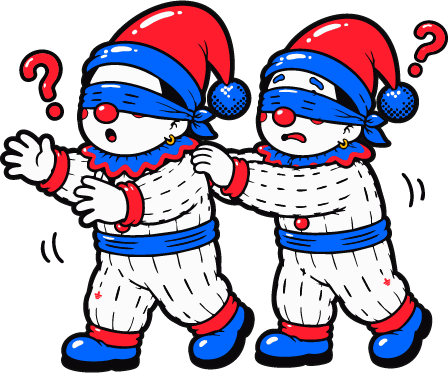
come meet my family! five thousand years of us, mostly leading each other along like this.
The Procession
swipe → five millennia of fools
Why every culture invented him
Every concentrated power has the same problem: the closer people stand to it, the more they lose by telling it the truth.
Not malice. Physics. Power bends information the way mass bends light. The advisors converge on what the emperor wants to hear, and they aren’t lying. They believe it. That’s what believing is for.
So the higher the power, the worse its information. Empires sure their armies were invincible. Companies that missed the shift. Families that kept a fiction running thirty years because nobody could be the one.
Every culture that lasted long enough to write things down solved it the same way: a figure outside the hierarchy (costumed, licensed, sacred, or all three) permitted to say what no one else could survive saying.
Look at how much scaffolding they gave him. That’s the measurement of how hard the job is.
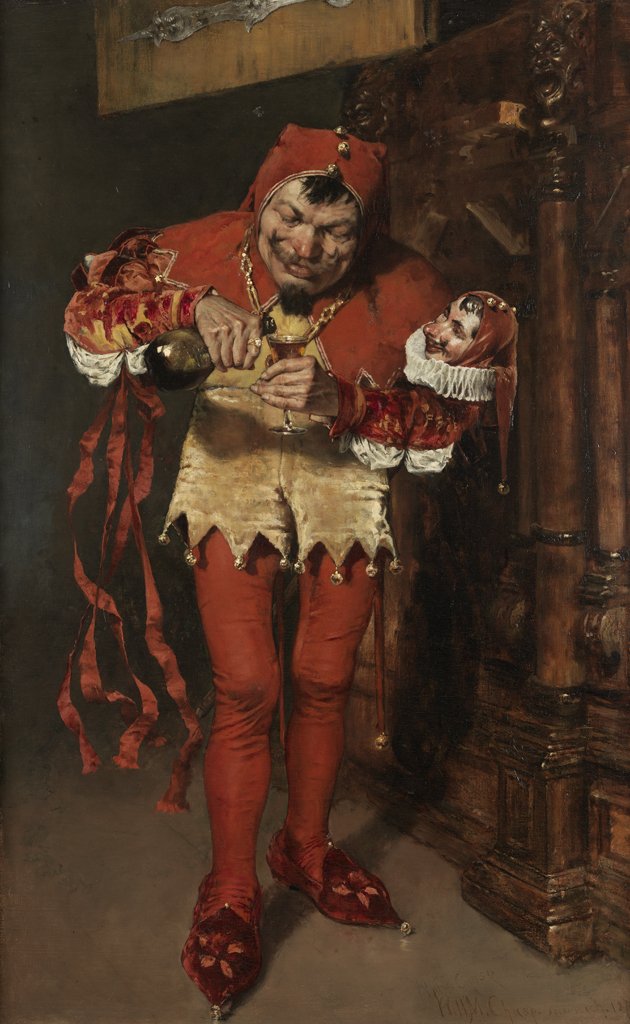
Egypt, 2500 BCE
The pharaoh is not a king. He is a god, theologically, on paperwork. Around him, a court arranged by proximity to the divine.
And one of the oldest royal letters we possess is a god writing, urgently, about a dancing dwarf. An official named Harkhuf had found him in the land of the spirits beyond the southern horizon, and the pharaoh could barely contain himself: bring him north immediately, living, prosperous, and healthy, to gladden the heart of the king, and be rewarded beyond any official before you.
What does a living god want that badly? Not a general. Not a weapon. Someone from outside the entire grammar of the hierarchy. No rank to defend. No ambitions to fear. Unreadable by the usual calculations.
Outside the system was the credential.
Hold that. It never stops being true.
China, 591 BCE
The state of Chu. Confucius is alive, kingdoms are at war, and the courts keep a figure called the you, the jester, with a job description encoded in one word: fengjian. Indirect remonstrance.
China already had official truth-tellers. Serious men, formal titles, written memoranda of criticism. They were routinely destroyed for filing them. The honest channel failed because everyone in it had too much to lose.
The jester worked a different channel. His words were, by definition, without offence: they arrived as entertainment. A criticism that comes as a joke can be heard, because the joke removes the threat.
The king’s favourite horse died. Of overeating, it should be said, the fate of anything loved by a man with unlimited resources and strong opinions.
The grieving king ordered the horse buried with the full rites of a high official, and decreed death for anyone who objected.
You Meng walked into the throne room and burst into tears.
The king, astonished, asked why. “Majesty, a minister’s funeral is far too modest for this horse. Give him a king’s. Build him a temple. Grant his descendants a fief. Let the whole world see”, a pause, “that Your Majesty prizes a horse above any human being.”
The king heard himself. The horse went into a bronze pot, like dinner.
No argument. No confrontation. You Meng simply agreed louder than the king had meant it, until the king could see his own plan from the outside.
Twenty-five centuries later, comedians are still using the move.
His other surviving story is gentler. When the old prime minister died and his family fell into poverty, You Meng spent a year learning to be him, the walk, the voice, the robes, and appeared at a banquet as the dead man. The king wept, and tried to appoint the ghost. You Meng, in character, declined on behalf of a man whose loyalty had left his son gathering firewood. The son got his fief.
That’s the job. Truth, wrapped so power can hold it without dropping it.
The Plains: Heyoka
The Lakota understood the world as paired opposites held in balance, and a community too sure of itself as a community out of balance. The corrective had a name: Heyoka.
You couldn’t apply. The role arrived as a dream of the Thunder Beings, terrifying, unrefusable. From then on you lived inverted. Heavy coats in summer. Bare arms in the snow. Riding backwards. Weeping at jokes.
Not entertainment. Technology. A daily, walking reminder that the way things are is only one of the ways things could be.
And the Heyoka healed by doing the unthinkable: singing their own shame in public. The thing everyone hides, performed. The laughter that answered wasn’t cruelty: it was relief. Someone had looked directly at the feared thing and was still standing.
Europe gave its fools a week a year. The Lakota built one into every day.
Russia, 1570
Ivan, the one history calls the Terrible, has just erased the city of Novgorod and is marching on Pskov with the same intent. His secret police answer to no law. His violence is not rhetorical.
Into his path steps Nikola Salos. A holy fool, yurodivy, half-naked in the Russian winter by choice, sleeping in church doorways, mocked, beaten, owning nothing, claiming nothing. A centuries-old Orthodox practice: foolishness for Christ. Surrender every protection: status, dignity, comfort, the regard of others, and find out what’s left when there is nothing to take.
Nikola offered the tsar raw meat.
“I don’t eat meat in Lent,” said Ivan.
“You do worse,” said the fool. “You devour Christian flesh.”
Ivan turned his army around. Pskov stood.
Understand what made this possible. Not courage as the absence of fear: the renunciation of everything fear holds hostage. Nikola made the internal move first, over years. The confrontation was just its public expression.
Medieval Europe
A hierarchy so total it was cosmology: God, angels, pope, kings, lords, clergy, peasants, animals, stones.
And once a year, around January, the church let its own juniors elect a mock bishop, bray the liturgy, swing smoke from old shoes instead of incense, and laugh at everything untouchable. The Feast of Fools. Its defenders explained it like winemakers: open the cask occasionally or it bursts. Laugh at the bishop one week a year, and you’ll bow the other fifty-one.
The court jester was the same license made permanent. Henry VIII, a man who disposed of wives, ministers and friends with industrial efficiency, kept a fool, Will Somers, who said things to him no counsellor would have survived. And was cherished for it. The joke was the armour.
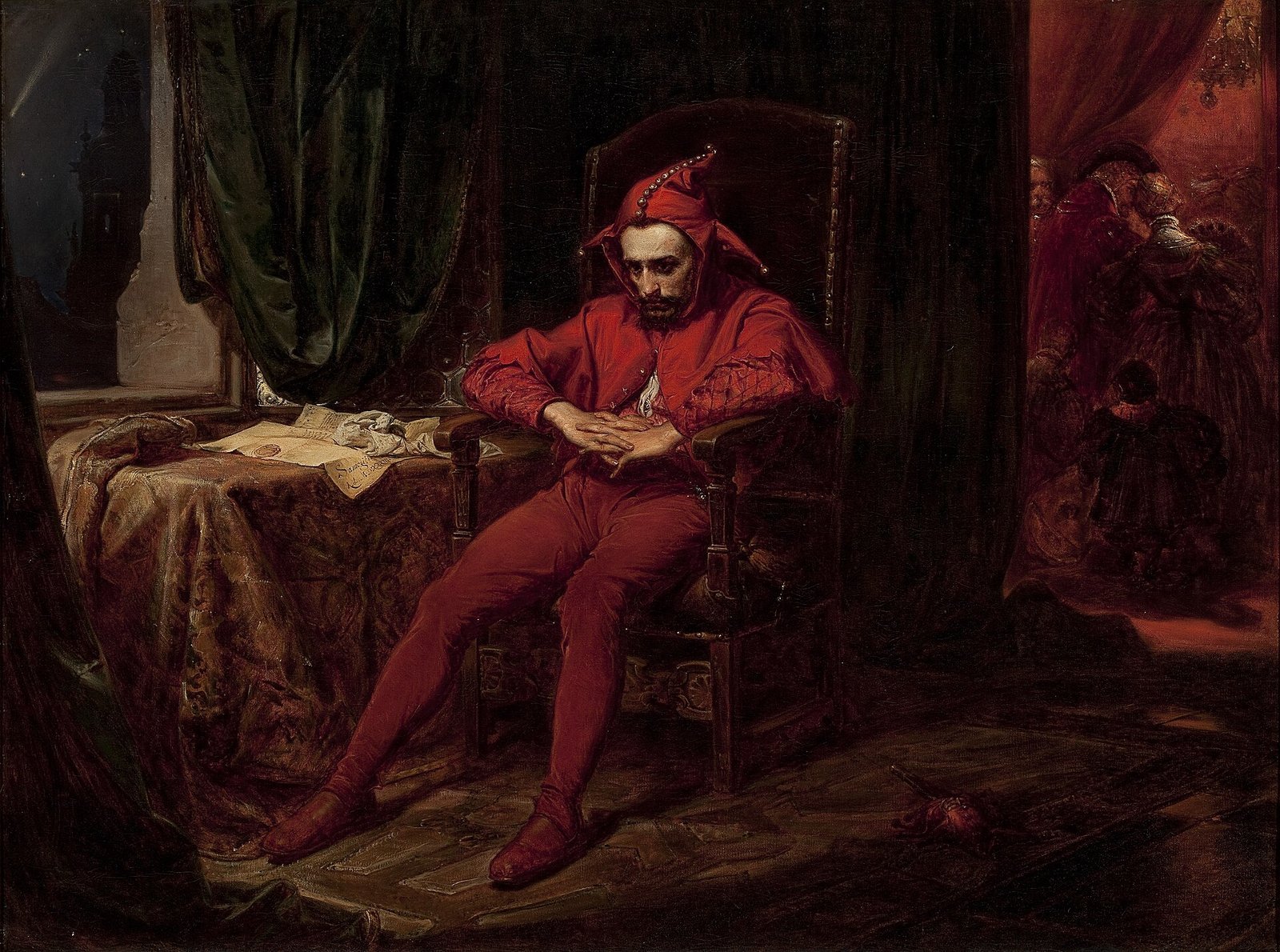
Rotterdam, 1509
Erasmus, the most learned man in Europe, understood the trick well enough to borrow it. Recovering at Thomas More’s house with nothing better to do, he wrote The Praise of Folly in a week. The whole book in the voice of the goddess Folly, praising herself.
Inside the costume he could say what no serious treatise could survive: that the wise are miserable, that the grandest institutions float on collective self-deception, that the deepest things in a human life look ridiculous from the outside.
The smartest man on the continent spent a week arguing that smart people had missed the point. He could only say it dressed as a fool.
Exile, 1930s: Bakhtin
Four centuries on, a Russian scholar named Mikhail Bakhtin, banished to the provinces under Stalin, wrote a book about laughter. On the surface, a study of Rabelais. Underneath, phrased very carefully, in a country where phrasing could kill you, an argument that carnival, the annual inversion, kings down and fools up, is how a society keeps the ability to see itself.
His dissertation was rejected. The book waited twenty years to be published. A book about suppressed laughter, suppressed.
Eliminate the carnival and you don’t get order. You get blindness with confidence.
True of states. True of companies. True of you.
London, 1820: Grimaldi
The nineteenth century gave the fool a new tent: the circus. Joseph Grimaldi, white face, red cheeks, the template of every clown since, was the most famous entertainer in Regency Britain. Dickens adored him.
The falls that made a nation laugh wrecked his body. He retired early, in constant pain, and sank into a depression no applause had ever touched. A doctor, not recognising his patient, prescribed the obvious cure: go and see Grimaldi.
“I am Grimaldi.”
The sadness inside the comedy isn’t an accident. It’s the bill. The fool sees through things, and can’t unsee.
we know this one by heart.
Hollywood, 1936: the Tramp
Chaplin built the most legible fool the world has known. Too-big shoes, too-small jacket, flattened daily by industry and pretension, and he gets up. Every time. The falling, you slowly realise, is the point.
In Modern Times he fed the little man into the literal gears of a factory, and said what political pamphlets couldn’t get heard, because a man being eaten by a machine is, even as it breaks your heart, undeniably funny.
The same move You Meng made in a throne room, twenty-five centuries earlier.
Paris, 1956: the red nose
A theatre teacher named Jacques Lecoq starts a school, and at the end of its long sequence of masks (neutral, expressive, character) places the smallest mask in the world. A red nose.
Students dread it. By then they’ve spent months unlearning their armour, and the nose conceals nothing. It reveals. Stand in front of an audience with no script, no character, no competence to hide in, and what’s left is you. Uncertain. Ridiculous. Completely human.
Lecoq’s discovery is the one this whole tradition was pointing at:
The clown is not a character you put on. It’s a part of you that gets uncovered.
And the self under the performance turns out not to be shameful. It turns out to be the most interesting thing in the room.
The license is mostly gone now: the courts dissolved, the feast suppressed, the sacred clowns pressed to the margins. The function didn’t go anywhere. It moved into hospital wards, into stand-up, into the friend who says the thing.
And into the place it was always finally pointing: you.
Chapter Seven
The Fool
and the King
You are both.

Every culture in the last chapter built the same pair. The most powerful person in the room, and the one licensed to tell them the truth. Pharaoh and dancer. King and jester. Tsar and holy fool.
Not tradition. Necessity.
A king’s job is order, and every order is made by exclusion: choose this, and that goes outside the walls. The excluded doesn’t vanish. It piles up out there, as pressure. The fool is the door: he carries in what the king cannot carry and remain king.
The most dangerous move power can make is firing its fool. A court with no dissonant voice isn’t strong. It’s brittle, error correction removed, failure approaching with total confidence.
Now bring it home, because this was never history.
There is a king in you. It keeps order: manages the reputation, holds the narrative together, decides what gets shown. Necessary work. Not the villain.
And there is a fool in you. It knows when the performance is false. It notices the gap between who you claim to be and who you are when nobody’s watching. It laughs, involuntarily, at things you take very seriously. It asks, in the quiet, whether this life is yours.
The king silences the fool all day long. Not maliciously. Routinely. And the law of the courts applies in here too:
The more completely the fool is silenced, the worse the king’s information.
A person who can’t laugh at themselves has fired their own error correction. They will be wrong with increasing conviction.
The aim isn’t to crown the fool. It’s a conversation, where the laughter gets asked what it’s pointing at, instead of being managed.
Who plays the fool in your court, the friend whose observations land slightly wrong, which is to say correctly? Have you made their honesty welcome, or quietly expensive?
Epilogue
Permission
The one thing the fool always took.

You’ve sat with five fears. And then with people who faced all five at once, in public, for strangers, sometimes with their lives on the table.
Not one of them was fearless. You Meng’s wrong word meant execution. Grimaldi hurt every night. Chaplin knew exactly how dangerous the film was, and made it.
The courage was never the absence of fear. It was the decision that something mattered more.
Notice what every culture gave them. Costume. Calling. License. Sacred status. Scaffolding: that’s how hard this is. Civilisations had to build infrastructure to make one honest person possible.
The scaffolding is gone. We dismantled it, and in its place built the most elaborate performance machinery in history: brands, profiles, a permanent audience, and became, on our own clinical evidence, the most anxious people ever measured.
The function didn’t get less necessary. It just lost its funding.

you made it this far. one last thing…
So it has to happen without the costume. Not by turning transgressive. Not by performing vulnerability: that’s the same act with new lighting. By the slower thing: making yourself, by degrees, less governable by the fear of looking foolish.
Notice where you perform certainty you don’t have.
Notice who tells you the truth, and whether you’ve made it expensive.
Notice what makes you laugh before you can manage it. That laugh is a flare from the part of you that sees. Follow it.
The permission you’re waiting for isn’t coming. The institution won’t license it. The room won’t grant it. The timing won’t ripen.
Every fool in this book knew that. The permission was never given.
It was taken.
It still can be. It only costs a moment of looking a little foolish.
go on, then. boop!
After the book
Permissions
A toolkit for the reluctant fool. Not homework, invitations. Open what’s useful. Leave the rest. The fool’s way was never systematic.
IBelongingon rejection, exclusion, and not being enough
Sit with
Who knows the parts of you that you consider least presentable, and who knows only the managed version? What’s the actual difference between those relationships?
What would you have to stop performing to find out whether people love you, or love your performance of you? How afraid are you of the answer?
What parts of yourself did you reject before anyone else got the chance?
A practice: the unmanaged conversation
Pick one mostly-managed relationship. Say one true thing you would normally withhold. Not to shock, just to make something real available. Notice your body before. Notice the relationship after. The yurodivy did this as a permanent way of life; you’re doing it once, in a low-stakes room. The gap between those scales is the lesson.
IIStatuson humiliation, exposure, and being found out
Sit with
When did you last attempt something you might visibly fail at? What happened to that willingness over time?
If no one’s opinion of you could change, what would you attempt that you currently aren’t?
Where has the performance of knowing replaced the experience of learning?
A practice: be a beginner in public
Take a class in something you’ve never done. A language you half-speak. A sport you’ll be bad at. The point isn’t to succeed, it’s to compare the anticipated humiliation with the actual event. The fear of the fall is worse than the fall. That can’t be understood in theory. It has to be lived once.
A practice, the Lecoq exercise
Alone in a room, put a small red object on the floor. Look at it for thirty seconds. Notice the resistance, the feeling of absurdity with no one even watching. That feeling is this book’s subject, in its purest form. Then put it on and walk around for two minutes. The question isn’t how performing foolishness feels. It’s what the resistance was protecting.
IIIControlon uncertainty, chaos, and the unknown
Sit with
What are you most certain about that you have never actually tested?
Describe the locked rooms. You don’t have to open them, just describe the doors. What do the signs say? When did they get locked?
A practice, voluntary uncertainty
Once this week, decide without researching. Order without reading the description. Take the unknown route. Agree to something before you’ve worked out whether you can do it. You’re feeding the prediction machine new data: the absence of control does not produce the catastrophe it keeps forecasting.
A practice, the devil’s advocate
Take one conviction. Spend thirty minutes building the strongest opposing case, not a caricature, the version its smartest defender would give. You Meng agreed with the king harder than the king intended; you’re doing the inverse. The fool’s gift is not the answer. It’s the loosening of the certainty that blocks it.
IVMeaningon mattering, and the life you haven’t lived
Sit with
If it earned no recognition at all, what would you spend your time on? What does the answer say about the gap between what you’re doing and what you want?
Where are you performing a version of meaning rather than experiencing it? Where are you Grimaldi?
A practice, two obituaries
Write the one your current trajectory earns. Then the one you’d want. Be specific in both. Sit with the distance, not with the guilt, which is the king’s response. The fool’s response is to laugh at the gap, then ask what one small thing could be different tomorrow.
A practice, the foolish attempt
Do one imperfect version of the deferred thing. The first paragraph. The phone call. The application. You Meng rehearsed a dead man for a year, but he didn’t wait for the king to be in the mood. The attempt, imperfect, was sufficient. They almost always are.
VSafetyon change, loss, and the ground shifting
Sit with
What are you staying in that you already know about? What are you actually afraid of?
What loss from the last five years turned out to open something? What does that say about your alarm system’s reliability?
A practice, the story from another angle
Take one settled story from your history, one where your role is comfortable. Rewrite it from the other person’s side, honestly. The yurodivy’s whole practice was seeing the order from outside it. This is the pocket version.
A practice, name the conversation
The one you’ve been avoiding. You don’t have to have it today. Write one sentence: the conversation I have been avoiding is… Every fool in this book said the thing everyone knew and no one would say, and the saying changed something. You’re being asked for step one. The fool always takes step one.
✦The Fool’s Own Practicesborrowed straight from the traditions
The reductio: You Meng
When authority is committed to a wrong position and direct challenge would cost you: agree. Enthusiastically. Then follow the logic out loud to where it actually leads. You’re not arguing, you’re accompanying the plan to its destination. (You’ll have to genuinely understand it first. That’s part of the medicine.)
The Heyoka mirror
Take something you hold with great weight, my value depends on this performance, and state its inversion with equal seriousness: I could fail at this completely and be worth exactly what I’m worth now. Don’t pick a winner. Hold both for twenty minutes. Notice what shifts.
Your own Feast of Fools
Once a quarter, an afternoon your normal identity would refuse. The expert asks only questions. The competent one learns something they’re visibly bad at. The curator posts the unpolished thing. The feast kept the medieval year honest; this one keeps yours.
One day without the mask
One low-stakes day: say what you think when asked. Admit what you don’t know. Express uncertainty instead of performing confidence. Then audit the damage. The yurodivy discovered that most of what we protect doesn’t survive examination as worth protecting. Run one day of that experiment.
∞Daily Questionssmall enough to carry, pointed enough to work
What am I pretending to be more certain about today than I am?
What did I not say today that I knew was true?
Who was my fool today and did I let them know they were right?
What made me laugh before I could manage it? What was it pointing at?
What am I waiting to be given permission for?
Where was the king today, and where was the fool, and who got more airtime?
The fool in every tradition was not the person who had resolved these questions. They were the person who had stopped pretending they had. Start there.
If you want to go deeper
Sources
Beatrice K. Otto, Fools Are Everywhere: The Court Jester Around the World (Chicago, 2001), the global study; source for You Meng and fengjian, via Sima Qian, Records of the Grand Historian (trans. Watson, 1993).
William Willeford, The Fool and His Scepter (Northwestern, 1969), the fool–king pairing as archetype.
Mikhail Bakhtin, Rabelais and His World (trans. Iswolsky, MIT, 1968), carnival and the culture of laughter.
Erasmus, The Praise of Folly (1511), short, funny, more radical than its reputation. Read it in one sitting.
Sergey Ivanov, Holy Fools in Byzantium and Beyond (Oxford, 2006), the yurodivy tradition, including Nikola of Pskov.
Lame Deer & Erdoes, Lame Deer, Seeker of Visions (1972), the Heyoka, from within.
Ernest Becker, The Denial of Death (1973). Brené Brown, Daring Greatly (2012), shame and vulnerability. Clance & Imes, the original imposter-phenomenon paper (1978).
Jacques Lecoq, The Moving Body (trans. Bradby, 2000), the red-nose pedagogy. A. M. Stott, The Pantomime Life of Joseph Grimaldi (2009). Peter Burke, Popular Culture in Early Modern Europe (1978), the Feast of Fools.
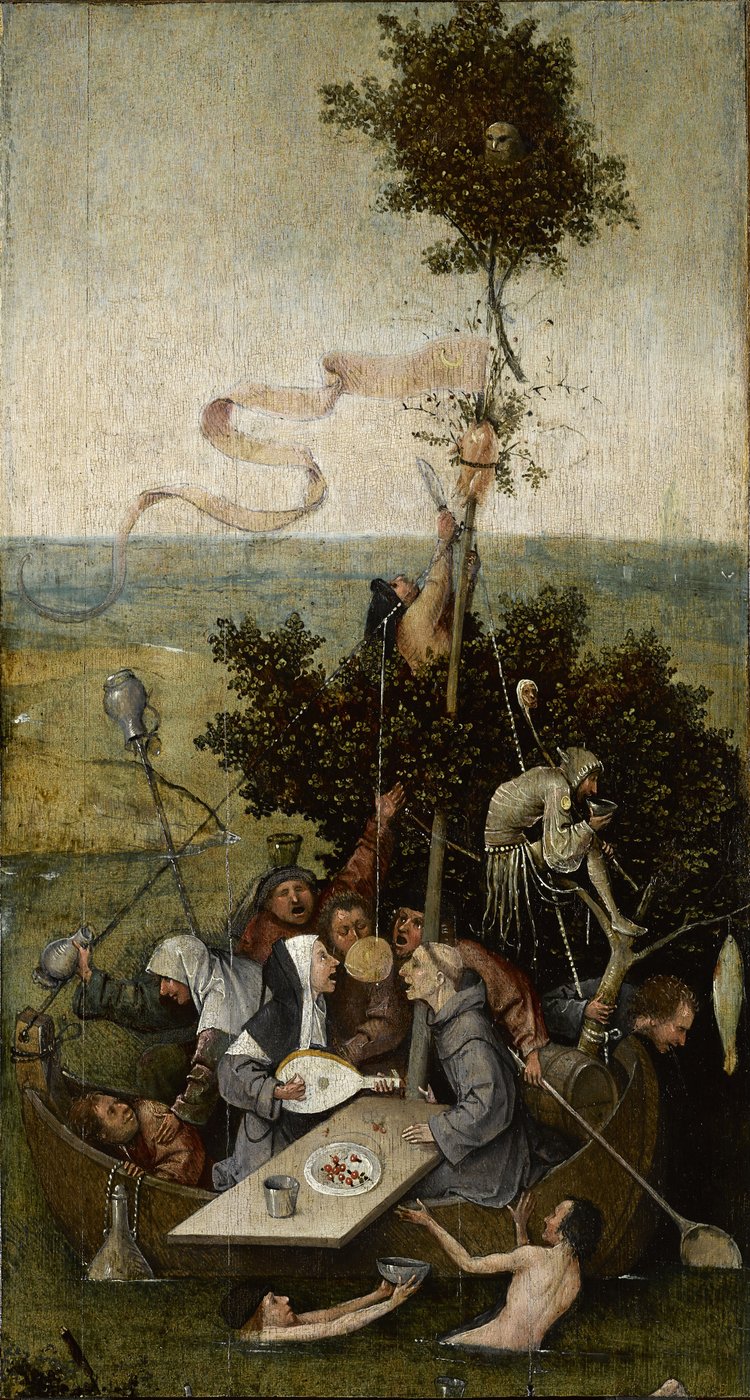
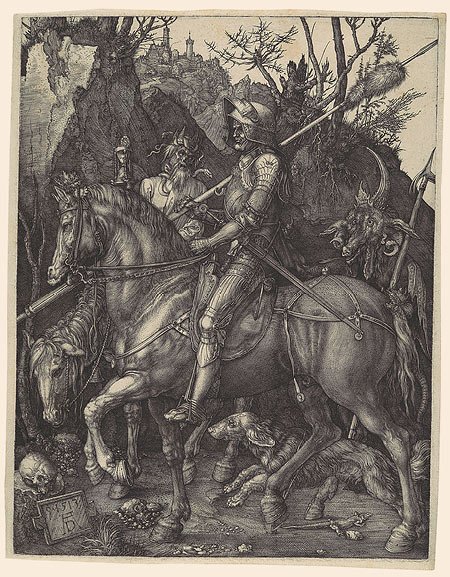
The episodes retold here, Harkhuf’s letter, You Meng’s horse, Nikola and Ivan at Pskov, survive in sources of varying reliability across great distances of time; they are given as the traditions kept them. The artworks reproduced are in the public domain.
Missing a reference? Apologies! What a fool I am. We all make mistakes. Please let me know asap.